In Praise of Men: A New Story

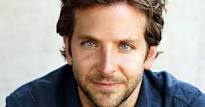
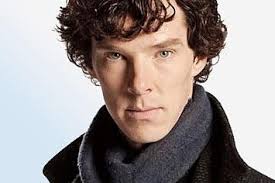
Bradely CooperBenedict Cumberbatch

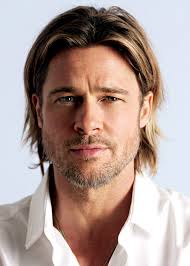
Brad PittChanning Tatum

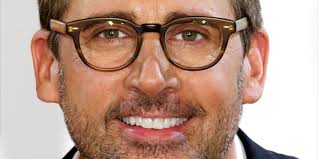
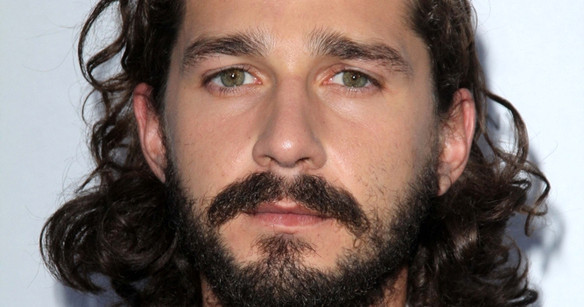
Steve CarellShai Lebeouf

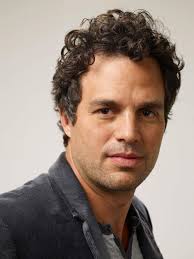
Mark RuffaloMichael KeatonBest David Oyelowo

What do these actors have in common? Ok, all of them are incredibly handsome thanks to the photographer who edited these “manly-men” into stardom. No one really knows what they look like as real people who get up on the wrong side of the bed or have a bad hair day, no one can envision them while spitting in the sink or going a few days without a shower. Oh and we speculate, believe me.   But, in the end they stay iconic on the screen for us to project all our ideas of “what a real man is anyway”?  Until this last film year.  The story has changed.

This past year something happened. It is part of a bigger gender shift. A bigger shift of the heart. The stereotype of the man who saves the day, the hero that we worship, the protector, the provider, the man who is Knight, King, Hero, or the Lover began to crack under the weight of it all. (not in Marvel Comic movies but we want it that way) Not only did these actors each jump over a cliff and become a broken version of any one of these male stereotypes during this last year in film, but they showed that underneath the roles, the expectations and the demands for what a man should be, is a human being carrying a different kind of weight: Psychological scars, forgotten emotions, a guarded heart and soul pain. These actors are the caricatures of a global “coming out” of sorts. Portraits of men in turmoil, suffering, pain and loss, having carried the crippling stereotypes for centuries. These warriors, businessmen, fighters, heroes, fathers, sons, husbands, soldiers and leaders each reveal a story that is rewriting itself.

Although the movie “Unbroken” did not win any awards or even a nod at the Golden Globes, the title alone could be why. The movies that have made a mark in film this year, have catapulted these male stars into a kind of acting that sets them apart, is expressly because all their amazing performances are about being… broken.

This is how film is perched on the edge of our changing collective consciousness and takes big bold brush strokes and paints a global picture for us to use as a mirror: Namely, that men are waking up, falling apart and choosing to break out of the stereotypes for the male gender that is in the process of being deconstructed all over the world.  Men are breaking down and trying to remember who they really are. We have leaned on “new models” for men through the gay debate, with pacifists, the younger generation, the metro-sexual revolution, through the alternative approaches to relationships in general in order to anchor the changes that are afoot.

We see the emergence of new ways of being for men in all these examples, but it has not been till now that the mainstream “John Wayne’s” of this world began to break out of their box which was made by society for the good of society. Well that was the thought anyway. But now we are seeing that all those “manly men” around the world are coming out of the closet of their own denial, their own hardships, their own illusions, having fought the good fight or towed the line and now we are hearing the other side of their story which in many cases is full of sadness, tragedy and fear. We all need to listen. And there is nothing more life changing than seeing all these themes projected onto an IMAX screen.  There is no running away.

The movies that have sparked this conversation and truly cranked up the quality of movie going a bunch of notches are listed below. In my opinion, everyone should see them all.

Foxcatcher: Steve Carell is a man so stripped of his own identity and carrying the identity of the entire Du Pont family that he is lost under a blanket of family power and limitless money but without a conscience which has created a mental instability that ultimately end in tragedy. John Du Pont played by Carell, has it all and nothing at all.

Foxcatcher: Channing Tatum who has always been a pretty boy in movies is a wrestler that has no sense of who he is apart from the sport he plays. He is so out of touch with his own talent and his own skills that he wanders between one authority figure and another just trying to do the right thing, but with no voice of his own. His brother, played by Mark Ruffalo, struggles to keep his brother on track as his coach, tries to have a work life and a be a good father and husband and yet is seduced by money which ultimately will be the death of his ideals.

American Sniper with Bradley Cooper is heartbreaking as we watch a loving man buy into becoming the soldier and going four tours to Iraq since he wanted to be patriotic. He kills over 160 men women and children as a sniper and loses his soul. The ravages of PTSD and the lost ability to have emotions or feel at home even when back in the good ole US of A is what he earns by becoming a killing machine for his country.

Birdman with Michael Keaton is a painful portrait of a man’s lost identity, his failing life, his crippled relationships as he tries one more time to be relevant, important, talented and famous and simply figure out who he is. One of the very best movies of the year.

Nightcrawler is the most efficient portrait of a sociopath played by Jake Gyllenhaal who only wants to be “important in life” and who will go to any length to achieve this. His portrayal of a damaged man “faking his life” and feeding off the misery of others untill he gets what he wants at any cost, is nothing short of brilliant and a little terrifying since he is very much like most of the leaders in our country.

Fury is all about war and the soul. Brad Pitt and the amazing Shia Lebeouf reveal the underbelly of the warrior and war itself. Shattered, spiritually destitute these men try doing their job and holding onto even a little humanity along the way. They do not succeed. This is all about the wounded soldier. as is American Sniper. This is the single largest archetypal wound for men in our culture.

The Imitation Game is riveting and true. But the character played by Benedict Cumberbatch is all about being a “different sort of man”, oddly out of sorts with society, a genius who was responsible for turning the tide of WWII and finding that there was no place for him in the world post war.

Selma is a look at the deep internal struggle for Martin Luther King played by David Oyelowo who did a five-star performance in a five-star movie and brought three days in the 60’s back into our consciousness, since we are still fighting the fight for freedom in a hundred ways every day in our world.

So for the women who have always wanted a man who could reveal his emotions, who would stand for justice without killing, who had integrity and creative passion, who protected all of life, not just freedom, who laughs, plays, sings, dances with life, these few actors are telling a story that is all about the shift away from the stereotypical man of our culture, to the man of the future. Women have always wanted more. And it seems that now men do as well. More than ever before.  I cannot wait to see what is next.

My Modern Day Parable

parable

parable is a succinct, didactic story, in prose or verse, which illustrates one or more instructive lessons or principles. It differs from a fable in that fables employ animals, plants, inanimate objects, or forces of nature as characters, whereas parables have human characters.

parable is a type of analogy.

A Modern Day Parable

By Maya Christobel

I was at the usual bus stop staring at my watch and impatient to get to work. “Crap, I won’t have time to get a coffee”, I thought. Then she caught my attention. Her unruly and disheveled hair flew behind her in the wind as she bolted past me. Her green eyes were wild with expectation and her gate was long and certain. She was on a mission. She pulled me out of my worry and I set my briefcase on the bench. I could not help but follow her as she weaved in and out of unfamiliar streets as her long sky blue robe swayed behind her, threatening to get snagged on a lamp-post or caught in a passing bicycle spoke. Her arms pumped fiercely as if she were in a race.


When she passed a dog tied tightly to a bicycle rack on the corner of Park Street she stopped momentarily and slipped off the chain collar, then scooped up the brown-eyed beagle into her arms and continuing on as if she had expected him. I could not keep up with her and began to fall behind as she continued to rush somewhere I imagined to be very important.

Suddenly, a boy with his skateboard and then a large blackbird and some strange old man sitting near the park joined her and now there were many people following her. She turned down an alley where a homeless man living in a cardboard box watched her come near. She stopped, her face a breath from his startled eyes as she smiled a smile that nearly knocked him to his feet. Then she took his hand and pulled him up and without a word he joined the growing crowd of children and old people and animals that become a wave of energy pulsing through the streets. The growing mob of unlikely people started climbing up to the top of the small clearing overlooking the city.

By the time I could catch up I was breathless. There she was perched out on an outcropping of cinder blocks that rimmed a small off-road parking area, the city carpet below her. She was deathly still, standing quietly overlooking the smog and hazy hidden buildings below. Everyone became quiet, waiting for her to speak, to say something important, to tell them what to do, to levitate, to combust, to break down weeping. Suddenly she turned as if surprised by the throng and with a deep and haunting laugh said,

‘What fun life is. Thank you for joining me”.


A short story can pack a punch. There is not need for long chapters, details or perfect prose. A parable is rich with imagery, with feeling and with a great outcome: It leaves us pondering life. This is what a good story should do if it doesn’t make us weep or laugh or want to punch the door out first.

Jesus was said to be one of the best storytellers around and through his parables, whether you are Christian or not, lessons on living have seeped into the culture of everyone’s life in one-way or another. He told parables which always had an “Aha” to be learned. He told parables about the ten virgins, the Good Samaritan, the lost sheep and the Prodigal Son. We’ve all heard about the mustard seed and a grain of sand or hiding your light under a bushel. In the end these short, visual, descriptive lessons on life can be a great way to start writing your story.

Once upon the time there was an old farmer who had worked his crops for many years. One day his horse ran away. Upon hearing the news, his neighbors came to visit. “Such bad luck,” they said sympathetically.

“Perhaps,” the farmer replied.

The next morning the horse returned, bringing with it three other wild horses. “What great luck!” the neighbors exclaimed.

“Perhaps,” replied the old man.

The following day, his son tried to ride one of the untamed horses, was thrown, and broke his leg. The neighbors again came to offer their sympathy on his misfortune.

“Perhaps,” answered the farmer.

The day after, military officials came to the village to draft young men into the army. Seeing that the son’s leg was broken, they passed him by. The neighbors congratulated the farmer on how well things had turned out.

“Perhaps,” said the farmer…

From a Zen Koan

Most writers are crippled and start sweating at the white, empty page staring back at them like a challenge. Most of the time there is a book to be written, all 300 uncertain pages. When a book is looking over your shoulder it is typical to simply say…”oh I will write ten pages today” and then start sweating all over again. Oh the pressure we put ourselves under.

I have been writing what I call “morning pages” for ten or more years. Just a free-flowing stream of consciousness that starts without any intention and always ends up somewhere I never intended to go: A poem, a confession, a rant. Lots of times I rant. But, more often than not, it is a story in the making. A little seed of an idea that I can come back to. It is in this uncharted territory of unexpected words where a story is born.

When I was living up in Crested Butte, Colorado in my “let’s open an art gallery and sell contemporary art to people who want cowboys and buffalos”, I was watching the news about a couple stranded in a snowstorm and living in their car for several days. I was seized by the need to make that into a great movie. I researched the couple, outlined the story idea, and then sat down to start writing a heartwarming screenplay about love, loss and redemption (since that’s what all movies are about in the end). By page 12 the story demanded to go in another direction and no matter how hard I tried to pull the story back into formation it wandered outside the lines of my own psyche and turned itself into a 120 page paranormal thriller with Jeremy Irons and Jodi Foster. I was captive to the story…it would not let me go and in the end the screenplay won several screenwriting awards. But it was not even close to what I had set out to write.

What did I do wrong? What did I do right? How did my idea morph into something so totally a product of my relentless imagination? Or was it that the story itself is energy that exists outside of my idea of time and space and was just waiting to be born?  I have learned that this is truer than you might think.

The story was able to take me somewhere unexpected simply because I was not attached to the outcome and I just showed up each day, punched on the computer, got my cup of tea, put on my headphones to listen to movie soundtracks while I wrote and in the end allowed the muse to take the characters where they needed to go.

Working this way is exciting and is a bit like tracking an animal in the woods. Most of the time you think you are following a deer and in the end you find out that it is Bigfoot.

So start with a seed. With a sentence from how you feel about a photo, use a line of a poem and take off…see where it leads you. You just might have a whole lot of fun!


leap and don't look down
leap and don’t look down


The Story Of My Life

“One can never consent to creep when one feels an impulse to soar.”

Helen Keller, The Story of My Life

This was a frequent phrase around my home growing up: “Holy Moly, story of my life”. If I got a collections letter in the mail, or I hear that a great guy has a secret wife, that my brand new shiny car needs a transmission or that in fact I really didn’t win the lottery after all…” story of my life”.   A handy phrase to describe something quite familiar. But what’s in a phrase?

We each have one story that repeats itself over and over again throughout our lifetime. It is like we got handed a script upon leaving heaven and incarnating that acts like a blueprint for our lives.  I promise you, one central ever-present and every changing “story of our lives”. The casts of characters change but they fundamentally play the same role in our lives, year after year. Every new love, new boss or new dog is just like a mother, brother, father, betrayer, helper, teacher and is the best of ourselves or the worst of ourselves. The place, the reasons, the motives, the fears, and the outcomes seem to remain similar as well.

So, if you were to just pluck out of the sky a scenario that you recognize as so familiar that it is a “repeat story” in your life, what would it be? Would the themes be endless hope, deep despair, betrayal, running away, lost love and fighting for what is right, or would it be, men leave, women love you but die, or maybe the all too often, am I good enough, can I prove myself, or that there is never enough money or time or money or love or money or food, nourishment or support?  Could you be in Groundhog Day like Bill Murray where over or over again you love the wrong person, you lose everything you have and need to start again, you never feel smart enough or have enough, or ultimately are loved enough? Does the white knight turn into the villain or are you the one who rescues and heals the world? We all have one story.  The trick is identifying what the story is.

If we take the time to identify this story, which repeats itself over and over again for our learning and growth, then we have abundant power to change the story, but not before we look it square in the eye and say “Yes” this is MY story. For most authors who are seized with a story line and write until the days are a blur and who forget to eat or take a shower, most likely the book or story being written is a mirror of the writer’s psyche.  The soul gets wind that there is a supreme opportunity to work out some kinks in life if only the writer would hop too it and let it rip, fantasy or no fantasy.

Most writers have to cop to the fact that writing is therapy. Writing is sanity. Expiation. Transformation and atonement. Most writers on a good and honest day will say that the story they think is pure fantasy is really from their own life, their own fear, their own desire to be a hero or heroine and to rewrite what went so wrong, so long ago. It is a powerful moment when you can write a fictitious character that is not you in reality, so that this character can do all the things that you only wish to have done or said or experienced in your life. Why else do we write?

And when we can fess up that our own story is driving the bus, we can not only heal our lives but we can write a story that touches the collective nerve. That is what makes a bestseller.

In the end….the story will write you.


Listen to What I Hear

Learn to Listen

“Being a writer means taking the leap from listening to saying, “’Listen to me.’”—Jhumpa Lahiri

I think the part of Christmas that has stayed with me since childhood, are the Christmas Carols that seem to live in me at a cellular level. All the music from oldies with Bing Crosby and White Christmas to Mannheim Steamroller can conjure place, people and moments that I have no need of a camera to instantly recall.

Each song has a story attached to it from my life. And whether is was a Christmas meltdown at the dinner table over some disappointment regarding presents, or the first Christmas with my daughters bright eyes wide open as they tip-toed down the stairs of our farmhouse in Maine to see what Santa had brought and whether the Reindeer had been well fed, I can recall the Technicolor of the moment as soon as Nate King Cole starts in with “chestnuts roasting by an open fire”.

I listened to these songs over and over, year after year. And in the listening I hear new things each time. Songs are story. Songs are assembled with tune, voice and words to transport. And for a writer, the story on the page is no different. Every amazing book we read or write and every extraordinary story we tell has a magic ingredient which makes the magic stand out: That magic ingredient lies in our capacity to listen.

I know that most of what I talk to writers about is how to tell the story, about great characters, tension, payoff and honesty. But none of this happens at the level that is possible for a writer without the deep capacity to listen. Listening takes pausing. Breathing. Waiting for the muse.

First and foremost, as a writer, I need to listen to my own intuition if I stumble on the direction of my story. I need to pause to listen to my characters whisper in my ear how they want to be developed. I need to listen to my own desire for what I want to say and what I don’t want to say. Every day. I need to be willing to listen to everything.

But, listening comes in layers. We can hear ourselves say “Oh that won’t be interesting”, or “I cannot share that much, be that vulnerable in my writing”. When this ultimately happens, oh pretty much every day, we have a goldmine moment to listen at a deeper level. Our unconscious selves long to be given a stage on which to express itself and when any one of us decides to write a story all the voices that we have silenced will try spill out onto the page.

If we can stay with what we are resisting and get to the bottom of why we are saying “no”, “I cannot do that”, “I am afraid”, then we can unearth parts of our stories, our characters and ourselves that become the magic and the real juice of our writing. Many of us as writers struggle to stay ruthlessly honest with ourselves and truly listen beyond our fears of being literarily naked.

The other part of listening as a writer is to make sure you have someone read your writing out loud and you listen to the story you are writing unfold. Hearing your words, the words of your characters and absorbing the writing as if you are the reader is a powerful way to tune up your writing style and to hear the places you need to improve.

And at the end of the day whether you are a writer or not, listening and hearing from a deep heartfelt level of awareness and presence is what we need in all our relationships, friendships, marriages, workplaces and schools. The gift of listening is transformative.

Bradbury quote

The Telling Room

selectric typewriter

My generation had no idea that the age of the computer was coming or what it would mean. Back then spelling was a mandatory class we took. We could not go into middle school without getting a passing grade in “penmanship”. I remember practicing my upper case and lower case letters on lined paper over and over again until all my words flowed like little art forms onto the page without effort. The act of writing with a favorite pen and crafting a story for school magically changed brain chemistry and balanced right and left-brain. But, now days, writing on anything other than a computer is rare and making up stories is becoming rare as well.

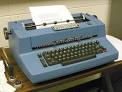
Then in college we had Selectric Typewriters that were all the rage, which replaced the typewriters that had spools of carbon ribbon used by Hemingway. Then came the Brother Word Processor and life was about to change forever.

Fast forward to my daughter’s generation who had computers in school, spell-check and there were no spelling and grammar classes or cursive in school. In fact unintelligible printing replaced cursive and the intimate relationship between a well-sharpened pencil tucked neatly in a row inside of a wooden pencil box put to a blank piece of paper all but disappeared. In fact reading books began to disappear and daydreaming and imaginative story telling was capsized by video games and television.

The art of storytelling is under siege and in fact the power of storytelling is rapidly becoming a lost personal art, and an underutilized healing tool in our society. Even movies are slowly giving way to franchised super hero trilogies and beyond that dominate the world of storytelling on the big screen.

But, there are those who want to teach storytelling to kids and young adults as a means to unlock creativity, unleash personal power and heal lives. One such teacher and writer is Susan Conley, a co-founder of The Telling Room, a creative writing lab in Portland, Maine who believes in the power of stories to transform lives and change communities.  She also believes that writing and storytelling healed her from cancer. Here is her story on TED:

Susan served as the executive director of The Telling Room for its first two years of life before moving to China, where she wrote a memoir titled The Foremost Good Fortune (Knopf, 2011). This book chronicles the years Susan, her husband and two young boys lived in Beijing, learned Mandarin, set out on The Hunt for the Greatest Dumpling in China, and contended with Susan’s cancer diagnosis. The book was excerpted in The New York Times Magazine and The Daily Beast and was voted a Goodreads’ Choice Award Winner for Best Travel and Outdoor Books of 2011.

Susan has been the recipient of two MacDowell Colony residencies, a Breadloaf Writer’s Fellowship and a Massachusetts Arts Council Grant. Maine Today Media gave Susan a 2011 “Greatest Women of Maine” Award. A graduate of Middlebury College and San Diego State University, Susan has taught creative writing and literature seminars at Emerson College, as well as at Harvard’s Teachers as Scholar’s Program. She continues to teach all flavors of writing workshops at The Telling Room and has a novel forthcoming from Knopf in the spring of 2013. Susan lives in Portland with her husband, Tony Kieffer, and their two boys ages 9 and 11, who are avid story tellers themselves and not at all sick of dumplings.

http://www.tellingroom.org/

Quantum Storytelling

Man-points-toward-galaxy-in-sc-32849888

I sat in a kind of stupor as the credits rolled, the crowd silently leaving the theater. I had a feeling that being in Oklahoma at the time, the majority of the moviegoers were baffled by what they had just seen. No one was talking, something had happened. I was the only one still in my seat. I had sat through three hours and two full bags of popcorn watching Interstellar. Not because Matthew Mcconaughey is beautiful or talented but because I knew that embedded in this film was far more than star power.

I am not going to review the movie here. But, I want to talk about how story can wake you up. Interstellar was written and directed by the Christopher Nolan who did Inception. Most of us know how it felt to watch that movie and witness something just outside of our grasp, but mesmerizing and intriguing enough to keep us glued to our movie seat. Interstellar was no different for me but far more powerful since it is a premier example of how story can change us at every level. I mean really change us.

That any filmmaker would attempt to take me into the heart of quantum physics and nudge me toward a new and more defined perception of time and space gets my attention. Flaws of moviemaking aside, I loved one particular thing about this story: That it revealed what the shift on our planet and in our own DNA as humans may be all about. And that is powerful.

I find myself gravitating to substance instead of the entertainment value of story. And Interstellar seemed to allow me to sink into the big questions of life, the unanswered questions, the heroic ones and the questions we all fear to really look into the heart of.   Questions of where do we come from, why are we here, what is god, are we alone in the Universe, what is beyond three dimensional existence, is there more than one Maya in the solar system and what does relativity and gravity have to do with everything? As for me, those are the only questions I am interested in.

So when I took the leap three months ago out of the world of psychotherapy and embraced what I truly love the most in life, I did so with the understanding that story would heal us as individuals and story would heal the planet in ways that are ineffable, illusive, complex and sometimes simply a mystery.

I held up a torch in my life to ask for stories to come to me. I held tight to my deep love and passion for stories of transformation, survival, hope and love as the greatest power in the Universe as I intended to write only these stories, and help others bring their amazing adventures and dreams into reality. I got far more than I bargained for. Gratefully.

People from all over the world are finding me in some of the most unusual ways. Phone calls and emails from those who suddenly feel ready to reveal secrets of the Universe only they have been entrusted with, stories of unparalleled heroism that will change lives and creative dreams and fantasies that speak to transforming our own natures from war to love, and from fear to magic.

I am pausing to allow myself to feel how very important each one of these stories are and how I can be a part of birthing weapons of mass love and power which is the medicine our planet needs. Medicine the storyteller needs as well, which will affect them on the deepest level imaginable and affect the lives of their families.

Storytelling is a sacred event. I cannot urge everyone enough to begin to see the stories that you have lived or imagined as sacred energy that you were entrusted with long before you were born.   You alone are the keeper of your own unique story of bravery, courage, pain and suffering, triumph of the spirit, love and lost love, finding god or becoming god.

The energy inherent in a great story or film creates a resonant response in our physical bodies, our thoughts and our hearts. That resonant energy begins a cascading shift and change in our own cellular nature. We are not only changed emotionally or intellectually when we read or watch an amazing story, we are changed energetically and physically. This is why I would always caution against the Horror and Death Film. We are changed in ways that only fear can accomplish when we subject ourselves to the images that these films provide in abundance.

And fear releases adrenaline and then fear becomes an addiction to the thrill of the adrenaline. In the end we are physically, emotionally and spiritually changed. The same can be said for the stories that we need far more: Stories of love and hope and courage. Stories of overcoming the unthinkable.

So, I am blessed to be given the opportunity to help any storyteller birth what is uniquely their primary and most powerful contribution to their legacy on this planet: A personal story that will resonate with the people who have simply been waiting for your story and just have not known it.

Later this week I will post under Screenplays the movies that are must sees and the books that should be movies. We all need food for the soul since our souls are under siege by technology and a planet in peril. Your story is a life raft, is a story to help each of us remember who we are, who we were born to be and who we have yet to become. Bravo to our brave storytellers.

Find your voice

The Writing Zone and Music

avatar

A few of you have asked about the fact that I never write anything without music.  I don’t care if it is a poem, a blog entry, a novel or an application for a writing residency. There is a way in which music shuts off the left brain and cancels out the distractions all around.  Music can simply put you in the writing zone.  There is a zone for for writers just like artists and musicians.  For me, well I admit, I listen most often to soundtracks to movies like Avatar.  So, for those of you who want to try your hand at writing with music here are my top three YouTube music compilations.  And set yourself up with a couple of “writing channels” on Pandora.  As for me, I love anything composed by the soundtrack wizards like James Newton Howard, Thomas Newman and James Horner.  Let me know what your favorites are.

https://www.youtube.com/watch?v=ShI_fv38qYQ&spfreload=1

https://www.youtube.com/watch?v=bYu5PWld89g

Oral Fixation

“I took the leap. I reinvented my work and what has happened in three short months is magical. I have the privilege of coaching and consulting with single mom’s in Colorado, professional women in Panama, a novelist in Ottawa, a single dad in Seattle, a poet in Boston, two medical students in NYC, a pastor writing a play, a dentist changing his world, entrepreneurs starting real estate businesses, beginning food blogs, writing memoirs and screenplays and self-help books. And it all stared with a fixation I had.”

I like to think of myself as a good communicator but that is not everyone’s sentiment about me. My friends and family might say I am a big talker, my father said I was “overly verbose”, one of my husbands just shook his head wishing I could simply embrace his silence and my daughters used to sit far from me in a theater when we were watching a movie, since they said I talked too much. And loudly I might add!

I confess. Most of that is true. But, in my defense, I am so in love with story that I always seem to have one to tell. But, since the advent of the computer and the communication gadget era we are losing something profound: Our oral tradition. And the oral tradition is all about family and community. The era of sitting around the radio and hearing stories with others, since there was no television, or sitting round the fire hearing the local storyteller raise the hair on the back of your neck and now, even reading a book is becoming something from the past.

Storytelling was a community event. Now, we are all separate from one another even in the movie theater. There is no gathering of the clan; no family story night and bedtime storytelling has given way to watching something on an i-Phone, even at the age of 7.

The new ‘oral tradition’ is not really even oral any longer. The cell phone and finding a friend for a chat, has now moved to cryptic texting. Beautifully spun stories are now shared in sparse sound bites and short cut conversations. We are loosing touch with each other in the illusion of being in touch. We are forgetting that intimacy needs meaningful contact and we are trading a great story or a profound movie experience for the 3 min web-series while waiting for the subway seated next to four more strangers staring at their phones and pounding away on keys.

And I am not immune to these radical changes. Since I drive a lot I have traded thick page-turners for a book on tape. I have driven two entire states and missed most of the countryside because Stephen King, the master storyteller, and his book Dr. Sleep, was spellbinding. I really tried to get through Catching Fire, the sequel to The Hunger Games, but after two disks and horrible writing I peeled into the nearest Cracker Barrel and traded it in for one of the best books thus far, The Litigators by John Grisham. This is the closest I have come to listening to a great storyteller tell me an amazing story.

My commitment to shifting my work to mythotherapy and away from psychotherapy, is to assist people in finding the story in them that needs to be written and that can heal their lives. This adventure has turned out to be one of the most amazing adventures I have invited into my life thus far.

My work for 30 years has been with people and hearing the stories they endured, the stories that they want to overcome and heal from. As a therapist this was my life’s work. Healing stories has become something far more for me and what I am watching and experiencing is that unpacking a story, whether a personal one, a fantasy or a gigantic creative endeavor has the healing power of the best therapy out there. So, I took the leap and created Mythotherapy and made the strong intention to help people get their stories told, while writing my own.

In three short months I have left the east coast with my cat, created a Skype practice and put out the beacon for storytellers that I am here help, to coach, to collaborate, to work on writer’s block and get their story written and published. It has been amazing. Intentions are beacons. They are like a red flare shot over the ocean of life that the right person sees, when they need to see it. As a result, I have fabulous new clients from all over the world, thanks to the Internet.

I have the privilege of coaching and consulting with single mom’s in Colorado, professional women in Panama, a novelist in Ottawa, a single dad in Seattle, a poet in Boston, two medical students in NYC, a pastor writing a play, a dentist changing his world, entrepreneurs starting real estate businesses, beginning food blogs, writing memoirs and screenplays and self-help books.

I am consulting with these wonderful and talented people on the next great Harry Potter book, a spin tingling thriller, a cookbook, essays to get into doctoral programs, a real estate blog that will make you want to rush out and buy every house in site, an unsolved crime, a Dr. Phil story that is shocking, a paranormal mystery and an alien Sci-Fi. And, I am blow away by those who are writing memoirs of true stories that we all need to read and hear.

My writing is better for every one of these people who are courageous enough to reach out and email me and then create a commitment to their story being told. My hope is that this oral fixation I have on telling stories, continues to manifest more amazing relationships and life changing stories we all need to hear.

Stories are our soul’s food, or hearts inspiration and our creative juice. Please. Tell yours.

PS: Did I fail to mention that committing to doing what you love works? Just sayin.


Manly Men

One of the most tragic stories in the history of our planet has to do with men. Yes you heard it hear from one who has spent thirty years speaking to women’s empowerment, raising one voice for women of abuse and delving into the history of terror for women which continues all over the world by the hands of mostly, men. So, this is a big moment for me as I come into my own deeper realization that we ALL have been brutalized at the hands of the Patriarchy whether it be religion or governing bodies, husbands, employers or terrorists.  Men have suffered, as have women.


Men designed, supported and have lived by powerful beliefs since the beginning of time with regards to what “manly men” are, why war is necessary, why bravery and courage and fighting the good fight is at the heart of what men are required to emulate. Men grew up thinking about the hero, the warrior and living under authority that was not their own. As a result, most men simply learned to soldier through life with no idea of what really lurked on the other side of this dysfunctional set of rules for being masculine.  Still in the most current dictionary the word Manly carries a heavy weight:

  1. Having or denoting those good qualities traditionally associated with men, such as courage and strength.
    “looking manly and capable in his tennis whites”

What is wrong with this picture?

performing, providing and protecting became the most important part of what made a man a man, which morphed over the centuries, as any imbalance does, into a toxic reflection of the masculine that took on the mask of control over, power hunger, greed and a disrespect for anything that is not…all of the above. But, what about the human condition that is innate which men were encouraged to exorcise from their self-concept, namely, emotions, creative and spontaneous dreaming, and anything that seemed to scream the feminine, as in intuition as power, emotional intelligence and compassion for the most part, all aspects of our humanity which were not in the game of being a man.


Today, through the widening crack in the system, we are hearing some clear thinking and feelings on this subject as they spill out into our collective conscience. And, at the front of the line for telling the truth of what men have endured in the attempt to adhere to the “real man syndrome”, is the movie industry. Hidden and not so hidden in the fabric of the movies that are coming out in droves this fall, is the untold story of the patriarchal underbelly and the price being paid not only by women, but by the men themselves who have fought for their country, for families, for putting meat on the table and for simply doing what authority says in order to get ahead and be the norm. But the norm is not normal. These movies not only hint at the corporate rape of men’s souls, the pressure of being the provider, the soul crushing reality of all war, but they expose some of the most vulnerable truths that men never really talk about.


This underbelly of the patriarchy is fraught with guilt, shame, emotional pain, fear and suffering that the soldier from war arriving home with a life long case of PTSD is simply a mirror for. The men who were trained out of a large part of their humanity are equally pained by what lies buried and seemingly out of their reach and far from the light of day: Their inherent lovable-ness, their soulfulness, their feelings and their fears. Personal suffering that is hardly measurable, that has no way of being addressed, creates anger and depression, suicide and alcoholism and men litter relationships with brokenness, heart attacks, stress reactions and lack of intimacy.


There are at least four movies that stampede onto the screen this fall and winter and are couched in what you might think as being a “guy movie” but under the surface you are witnessing a revelation of the inner life of men. I am not talking about any of the Hangovers, The Interview, all the Seth Rogen movies and the plethora of wanna be cop movies since they just keep men Dumb and Dumber. But Fury with Brad Pitt, the up and coming Unbroken by Angelina Jolie, The Railroad Man with Colin Firth and The Judge with Robert Downey Jr. and the impeccable Robert Duval are stories of men who did what was expected of them in war, in work and at home and paid a horrible bone crushing, life sucking price which the women in their lives inherited.


Men brokered their own deeper humanity for towing the line and for fear of not being one of the boys.   These movies eek out themes of the loss of love, the powerful bonding between men that can only be expressed by the short hugs or the slap on the back, the cold war between fathers and sons who cannot express emotion and the inability to be fully themselves are rare confessions from men in movies. And we as the onlooker with popcorn in hand, rarely get to see these themes unfold in all its pain.


As stories go, this story is the one story that our society needs to look square in the eye since things are changing and they will not be returning to “normal”. Men and women alike are crying for balance within and without between the masculine and the feminine and in the long run the shift that everyone is heralding on our planet has, at its heart, the crumbling of the patriarchy in all is dysfunction and abuse of spirit. Movies start consciousness moving outside the box, whisper the unspeakable, leave us breathless with visual brilliance in a moment that captures anguish which cannot be expressed any other way than with flying body parts. Then we watch the inevitable as Brad Pitt takes all the suffering of war and buries it deep inside just as our fathers, brothers and lovers have, only to create suffering for the generations that follow.


We have spent decades in the arms of a feminist movement that has made clear how ravaged, and how brutalized women have been from the beginning of time at the hands of the patriarchal model, but it is now time to have the conversation that is so needed regarding the wounded warrior, the brutalized man, the man who has been denied his soul.


I am inspired by the list of “man movies” that should become the most important “chick flicks” to see. So in the service of story telling I want to review all of the movies that I have mentioned here, not to give anything away, but, to coax you in seeing violent and harsh movies as a way to more fully understand the darkness of the patriarchy and what men have endured. I will add a new post for each movie to the Screenplay section of my website, starting with Fury.

Words or Pictures, That is the Question

“Words are like eggs dropped from great heights; you can no more call them back than ignore the mess they leave when they fall.”  ― Jodi PicoultSalem Falls

The movies about “writers” over the last few years all seem to revolve around this common theme: Self criticism of the crippling kind and the fears that will drive writers to do the unthinkable. Copy. The following movies are some examples of the writer’s task at hand: Self-belief and the daily struggle for self-validation while keeping the love for the words on the page, alive and well. And none of these movies that came out in the last two years are very good from a cinematic standpoint, but Bradley Cooper in The Words and from one of my favorites, Silver Linings Playbook, is wonderful. The down-right-perfect Jeremy Irons from just about everything you have ever seen, like Fitzgerald and The French Lieutenant’s Woman (which I confess I have seen 8 times) is sexy and brilliant, even when he has no lines.

So, for all the writers out there that just might struggle with the “not good enough syndrome” here are a few cinematic treatments on the topic. My favorite: Third Person with Liam Neeson. What a twist of truth-telling at the end and from Paul Haggis who did Crash.

words and pictures movie poster 2

Words and Pictures:  Juliette Binoche and Clive Owen

Clive Owen is a poet, an alcoholic struggling with the pressure and anxiety of holding on to his edge as a writer who then simply becomes an asshole all the way around. But, he loves words, uses them freely and plays word games with all his relationships. Enter a renowned painter, Juliette Binoche, who is struggling with RA and has to find new ways of painting through the pain. This art instructor and this English teacher form a rivalry that ends up with a competition at their school in which students decide whether words or pictures are more powerful. Writing verses painting. Words and Pictures is a thoughtful film about ideas, about creativity and the power of language pitted against the eloquence of visuals.

It features two great performances full of energy, but has a pretty lame script from Author and screenwriter Gerald Di Pego who may not be a household name, but he’s “maintained a surprisingly healthy career penning novels, original screenplays, and adaptations for more than forty years”, like some of my all time favorite campy and b grade movies like, Forgotten, Phenomenon with John Travolta and Message, cry your eyes out, in a Bottle.

Words and Pictures has a slew of flaws, but the performances by Clive Owen and Juliette Binoche have a crackling, irreverent, feisty vitality, and the screenplay’s strongest moments set off trains of thought that dedicated teachers everywhere hope to ignite in their students. But that is not what this B- movie is really about. It is about what seems to be a universal issue for writers: Fear they are not good enough and how it can eat you alive.

And so enters the theme of copying someone else’s. …Words. Ouch.

Authors_Anonymous_film_poster

Authors Anonymous:  Dennis Farina

After a dysfunctional group of unpublished writers accepts Hannah into the fold the last thing they expect is her overnight success. Her career takes off and her eccentric and jealous colleagues, played by Chris Klein, Teri Polo, Dylan Walsh and Dennis Farina (who died this year and hopefully not from the lack in this movie), struggle to find their own success and fame as their rejections turn to desperation. Simple plot, simple-minded movie. Hollywood Reporter says: With its mockumentary-style, semi-improvised portrait of a writers’ workshop whose mostly untalented members become consumed by jealousy and petty bickering, Authors Anonymous sounds like a terrific concept for a Christopher Guest movie. Unfortunately, Guest didn’t make it. Theme? Rivalry and jealousy while we compare ourselves to everyone, but our own innate standards.

third person photo

Third Person:  Liam Neeson

When a writer is the center-point of a movie, chances are that you are being led to peer into the tortured psyche of the writer behind his or her work. Sometimes this can be fascinating, as was the case with Adaptation or even The Shining. Not so much so in this movie. But it had me fixated from the beginning anyway. Don’t throw away the chance to see it because it has some real value in the twist and turns of bringing us into the inner workings of some truly odd and eccentric relationships that all lead back to our writer played by Liam Neeson. “Third Person,” is a metaphoric title nudging us to keep going with the premise of a distinguished yet struggling author who “steals the very words out of the mouths of acquaintances” for his new book on love, guilt and a little more guilt. But you won’t see it coming…I won’t give it away…not everything is as it seems. Except for the guilt. Theme: Most good writing comes from the deep honesty we are willing to have about our own life stories and the naked truth we are willing to show to the world. Writing is a peep show. Paul Haggis brought us Brokeback Mountain, Crash and Million Dollar Baby.

The words

The Words:  Bradley Cooper

Writers and Directors Brian KlugmanLee Sternthal who did Tron and Cloverfield,take this romantic drama with Bradley Cooper, Zoe Saldana and Jeremy Irons and stuck a jagged edged knife in our ribs as we watch the angst and guilt of a young writer who finally achieves long sought after literary success after publishing the next great American novel which… he did not write at all it seems. The past comes to haunt him as his fame skyrockets and he if forced to confront having stolen another man’s deeply personal story, and another man’s manuscript. Enter Jeremy. It carves up the struggle between ambition and power, fame and self-worth and guilt and shame, the ultimate bind. Theme: Self-Belief. What else is there?

be boring say everything