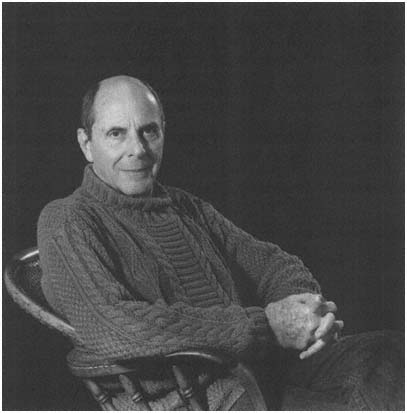
Get Your Butt in the Chair

anne lamott

Anne Lamott is an amazing writer and is about to turn 61.  She wrote a piece about what she has learned about life and a couple of items had to do with being a successful writer.  She is the author of the New York Times bestsellers Grace (Eventually), Plan B, Traveling Mercies, Bird by Bird and Operating Instructions, as well as seven novels, including Rosie and Crooked Little Heart. She is a past recipient of a Guggenheim Fellowship and is a premier example of writing from the heart with humor, with depth, and with flat-out courage.

Here is what Anne offers up to those of us who craft our words and send them out into the world as seeds never knowing what garden will spring up as a result.

“Writing: shitty first drafts. Butt in chair. Just do it. You own everything that happened to you. You are going to feel like hell if you never write the stuff that is tugging on the sleeves in your heart–your stories, visions, memories, songs: your truth, your version of things, in your voice. That is really all you have to offer us, and it’s why you were born.”

“Publication and temporary creative successes are something you have to recover from. They kill as many people as not. They will hurt, damage and change you in ways you cannot imagine. The most degraded and sometimes nearly evil men I have known were all writers who’d had bestsellers. Yet, it is also a miracle to get your work published (see #1.). Just try to bust yourself gently of the fantasy that publication will heal you, will fill the Swiss cheesy holes. It won’t, it can’t. But writing can. So can singing.”

“E.L. Doctorow said about writing: “It’s like driving at night with the headlights on. You can only see a little ahead of you, but you can make the whole journey that way.”

Cowardly Writing?

memoir

Those who split hairs in the literary world have been divided for some time on the genre of Memoir writing.  Some have said that the creative curve for a writer of fiction is not the same for someone writing a true story about some part of their life. But others recognize that the depth of honesty, emotional availability and psychological fortitude that a memoir writer is required to dive off the high dive to achieve, is in fact a courageous form of writing.

Here is a great article from both sides of the memoir fence.  See how you feel about it….then keep writing!


“Through telling my story, listening to the stories of others, I am empowered—even as I still, at times, get scared. But I try not to allow fear to preclude me from writing. After years of silence, I have a voice.”

It probably doesn’t bear reminding, but I will remind you anyway. In the March/April issue of the AWP Writers’ Chronicle, Aleksander Hemon, in an interview with Jeanie Chung, contrasted fiction and memoir and found the latter wanting in some way, even cowardly. Sue William Silverman, my friend and colleague at Vermont College of Fine Arts and a famous practitioner of the art of memoir-writing, wrote a retort which appeared as a letter to the editor and was also reprinted under the title “In Defense of Memoir” on Dinty Moore’s Brevity. Suzanne Farrell Smith wrote a measured summary of the whole story (“Hemon, Silverman, and What Makes Good Writing“) on her blog and pointed out that just months after casting aspersions on the genre in the Chronicle, Hemon published a memoir of his daughter’s illness in The New Yorker. (In the nature of things, he probably did the interview long before he wrote the memoir, but the two came out in ironic proximity.)

Now Sue has contributed a call to the barricades, an inspirational rationale for memoir-writing which, yes, includes a small excursus into her own acts of memoir (and delightful photographs which are a memoir in themselves).

Sue William Silverman is the author of numerous books, essays, and works on craft, and she is a profound influence in the lives of her students (see the recent NC Childhood essay by Kim Aubrey as an example). Her memoir Love Sick: One Woman’s Journey through Sexual Addiction was made into Lifetime television movie. Her first memoir Because I Remember Terror, Father, I Remember Youwon the Association of Writers and Writing Programs award in creative nonfiction, while her craft book Fearless Confessions: A Writer’s Guide to Memoir was awarded Honorable Mention in ForeWord Review’s book-of-the-year award.

The Courage to Write and Publish Your Story: Five Reasons Why it’s Important to Write Memoir

By Sue William Silverman 

I’m frequently asked why I write memoir. Why reveal intimate details about my life to total strangers? Why put myself, or my family, through the pain—some would even say shame—of telling family secrets? Why not just be quiet, keep personal information to myself?

Here is how I answer:

Growing up, I lived a double life. On the face of it, my family seemed normal, happy. My father had an important career. We lived in nice houses and wore expensive clothes. But all this seeming perfection was a veneer, masking the reality that my father sexually molested me, a reality never spoken aloud.

Later, as an adult, I continued to live a double life—this time as a sex addict. Again, in public, I appeared normal, with a professional career and a seemingly good marriage. No one knew that the shiny façade hid dark secrets: I cheated on my husband; I was close to emotional and spiritual death.

Before I began to write, I didn’t fully understand the effects of the past on the present. For years, the past appeared in my mind’s eye like faded black-and-white photographs in which no one, especially me, seemed fully alive.

Then I started putting words on the page. Finally, I chose to examine my past. Through this exploration, it was as if I slowly began to awake after living in a state of emotional suspension. I wrote my way into the darkness—not to dwell there—but to shed light on it. My entire life changed, all for the better. I no longer lived a lie.

I encourage you to explore, through writing, your life, as well. Whether your childhood was traumatic or not, whether your current life is in disarray, chances are you have a story to tell. Whether, say, you’re figuring out a divorce, finally coming to terms, perhaps, with an alcoholic mother or an absent father, struggling to repair a relationship with an estranged sibling or battling a physical disease, we write memoir to better understand ourselves, as well as to bring a reader with us on our journeys.

Here are five reasons why your life will be enhanced by writing a memoir, by telling your own story.

.

1. Writing Memoir Helps You Overcome Fear

Most memoirists I know are scared to write their stories. Sometimes the fear evolves from the material itself, the fear of facing events from the past, painful episodes that have remained dormant for years. When this is the case, remind yourself that you’ve already lived through, survived, the actual moment—whatever it was. Now, tell yourself, you’re “only” writing about it, figuring out what it meant.

Other times the fear concerns revealing a family secret. Will family or friends judge your story, judge you? Will your mother get angry? Will your father threaten to disown you? As scary as possible judgment or rejection might be, remember: You can’t control anyone’s reactions. All you can do is write your truths, refuse to continue living in silence, or living a lie.

If you’re struggling just to set words down on paper, I suggest that you try not to think about “others.” I, at least initially, pretend I’m writing just for myself, ignoring as much as possible the fact that friends, family, even strangers might one day read my story. I pretend no one else will ever see my work; and, in any event, it’s my choice whether I’ll ultimately share it with anyone or not.

Of course, this can be easier said than done. Therefore, on particularly scary days, I tell myself I only need to write one page today; I don’t overwhelm myself by thinking I’m writing a whole book! If you need to break it down further, tell yourself you’ll write just one sentence this morning. Or, on verytough days, one word before lunch.

But never give up! This sounds obvious, but the only way I know to work through difficult material is to do just that—write straight through it—focusing on one word at a time. Learn to sit in the dark places. To skirt an issue, to sidestep it, is to remain in an emotionally vague or unfeeling place.

Once the words are down on paper, you’ll feel as if a great weight, the weight of the past, has been lifted—not just off your shoulders—but from your psyche. Now, the past barely haunts me. It’s as if I extracted it, and now it dwells between the covers of a book. I feel lighter, freer, as if I can truly breathe.

.

2. Memoir Helps You Understand the Past and Organize Your Life

I gain clearer insights about my past when I write it, rather than simply sitting around thinking about it in the abstract. What was the relationship, say, between my sexual addiction and being molested by my father?  How did the past cause such emotional devastation?  I discovered the answers to these important questions through the written word.

Writing is a way to interact with—and interpret—the past. It helps us make sense of events whether they are traumatic, joyful, or just confusing. Writing sharpens our senses so that images and details from the past emerge in a new context, one that illuminates events for ourselves as well as for our readers.

Living my life day by day, I never stop long enough to question events. There are errands to run, meals to cook—to say nothing of emotional clutter! Who has time to stop and think about events swirling around us?

Only when I put my everyday life on hold, so to speak, sit down at my computer and write, can I even begin to see a pattern to the rush-and-tumble of life.

Memoir writing, gathering words onto pieces of paper or on a computer screen, helps us shape our lives. By discovering plot, arc, and metaphor, we give our lives an organization, a frame, which they would not otherwise have. Memoir creates a narrative, a cohesive life story. It gives your life a previously undiscovered structure and theme.

.

3. Memoir Helps You Discover Your Life Force

Before I wrote, while I kept secrets, I didn’t feel as if I were really living my life.  I didn’t have a clear grasp of who I was. What, and who, was the essence of “me”? Even when I first considered writing a memoir, I went, by turns, thinking that no one would understand or care about my story, to believing that, since there are thousands of other incest survivors, my life story wasn’t unique. My voice wasn’t special. I didn’t matter.

Just the opposite is true.

When writing, if I forge even one good sentence on any given day, I have discovered a kernel of emotional truth. In that sentence, I feel that life force of “me,” as if it’s my pulse.  To write is to give birth to a more complete self.

There is only one of you. Your voice is unique. If you don’t express yourself, if you don’t fully explore who you are, that essence of you will be lost forever.

Remember: you’re writing your book, first and foremost, because you must. The act of writing is where the spirituality of artistic endeavor resides. Focus on the words during the creative process: what do they reveal about you?

In order to be creative and fully engage in the process, writers must give themselves permission to set aside the fears. Ultimately, the more I challenge myself, the more courageous I become.

.

4. Memoir Helps You as well as Others to Heal

In an online interview in Chronogram, Mindy Lewis explains that during the writing of her memoir, Life Inside, she confronted her mother for confining the teenage Lewis in a mental hospital for twenty-eight months in the 1960s. A terrible fight between mother and daughter ensued, her mother not understanding why, in her opinion, Lewis hated her enough to write a book about her incarceration.

Afterward, Lewis went into a clinical depression that was “set off by the guilt and terror about writing the book. I felt my values were so screwed up that I’d rather write a book and hurt my mother.” It was through the support of others who’d gone through similar situations that she continued writing.

Ironically, it was ultimately the book itself that brought Lewis and her mother close. Lewis sent her mother four chapters-in-progress and received a return letter in which her mother provided her own perspective of events. Lewis’ mother, by acknowledging her daughter’s story, chose to put her daughter’s “success and happiness above her own, putting aside her fear and anxiety about being seen as a bad mother.” Lewis says, “Our relationship became transformed; I realized how much I love my mother.”

I myself learned that writing about my experience not only helped me, but helped other women, complete strangers, still struggling. For example, after I completed a reading at a library in Athens, Georgia, one woman waited until everyone else had departed. Approaching me, she was so scared she began to cry. She confided that I was the first person she’d told that her father had molested her. She was too traumatized even to tell a therapist. Why did she confide in me, trust me? Simply because I had written my story. Through this meeting, both of us were empowered.

.

5. Confessing through Memoir is Good for the Soul

Telling family secrets—any intimate secret—can be scary. Ultimately, however, I reached a place wherenot telling the secrets was worse. I felt heavy, weighted down. Finally, then, it was more a relief to write my life then ignore it. So even though at times I felt uncomfortable during the writing process, in the end, I felt a sense of release.

In short, with every word I wrote the pain lessened. It was as if I exorcised it, one word at a time. As you challenge yourself, you’ll feel more courageous every day. Writing memoir energizes your psyche, nourishes your soul.

Only by writing my story can I be an emotionally authentic woman, an emotionally authentic writer.

Whatever the reaction of family members, our job as writers is, first and foremost, to tell our stories. Our job isn’t, after all, to make people feel settled, calm, or comfortable. And even if we ourselves initially feel uncomfortable about shaking things up, we become empowered. If we use this power—not out of a sense of revenge—but to understand our narratives—then we bear witness to honest human experiences and emotions, thus freeing our souls.

And you never know: the reaction from family might not be negative. It might be soulful for your friends and family, as well as for yourself. In an interview inFourth Genre, author Kim Barnes suggests we not automatically assume that friends—or even close family members—will get angry if we write about them. “If you…treat people…with complexity and compassion, sometimes they will feel as though they’ve been honored, not because they’re presented in some ideal way but because they’re presented with understanding.”

In short, whatever the roadblock—real or imagined—write anyway! To do so is to feel your horizons expand within yourself, as well as outward toward friends, family, community.

Writing is a way to remove the muzzle and blinders from childhood. Writing is a way to take possession of—to fully own—our lives. Only you own your memories. As sole possessor of them, you are free to write them. By doing so, you will feel your own power.

Sure, the writing forced me to examine my life in ways that were scary. Was it worth it? Yes! Writing my first memoir, then going on to write a second, are the best gifts I ever gave myself. Fearlessly writing memoir allows all of us to claim our voices, be heard, and understand our own life narratives.


The Three Magic Bullets for Success

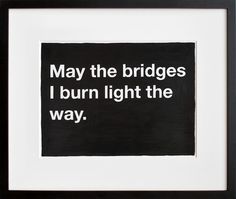
burn bridges

I have the fun and the privilege of working with a great author who is writing a spine tingling true crime novel. If I secretly loved Silence of the Lambs and didn’t sleep without my door locked for ten years after watching it (with my coat over my head), well I now get to spend time as a writing coach on this project, getting inside the head of a real life Hannibal Lecter. What is a psychology degree good for if not to help write amazing psychopathological characters?

And today, as he and I discussed his writing, I realized that what we discussed were common and maybe even universal themes in writing which challenge newer writers. So, I thought to pass these three pillars of writing a page-turner on to you. I have included three links to short discussions by various writing voices out there, so have fun and then write, write and write some more. 

Common Challenges in Writing

Narrative vs. Show Don’t Tell

If you decide not to write a narrative book, where the narrator is like god and telling the reader everything that is happening, and instead you want to show don’t tell your scenes, here is a great little website that does a simple but good job of talking about what most writers struggle with. I know my learning curve was steep. But, as a screenwriter it was the gospel to write this way.

An example of telling is to write something like: “Glenda felt angry”. To show your reader that Glenda felt angry you might write: “Suddenly Glenda’s face turned a crimson flush, as she grabbed the dish on the table and hurled it into the wall, shattering her mother’s favorite bowl into sharp-edged fragments.” Which one keeps you more engaged, since that is the object of show don’t tell; keeping your reader engaged so they burn through your book and then rush to Amazon to see if there is a sequel?

I am a big believer in Show Don’t Tell as the single most important hook for a reader locking themselves in the bathroom with your book, not to be interrupted, while they hold a wet hanky in one hand and have bitten their nails down to nubs on the other.

So, I pass this article on to you.  I like the way David Wilson describes what you need to know and then from there if you CHOSE to follow this idea in your own writing, you just practice, practice, practice.  In my mind the best way to accomplish show don’t tell is to literally, like a method actor does, immerse your self in the scene as one of the characters. Then smell, taste, touch and feel what is happening in detail and write it.

http://www.wright.edu/~david.wilson/eng3830/creativewriting101.pdf

Maintaining your dynamic Tension. In a great Blog called, Now Novel, the authors talk about how to create inner and outer tension. Most of us think about conflict as coming from outside of the self; a car wreck, an intruder, the IRS knocking on your door but in actuality I think inner tension is even more powerful.

“When writers think about building suspense, they often think about conflict from outside. However, tension is strongest when it arises both from forces outside of the character and those within. In some cases, the two types of tension may reflect one another; a character who struggles with insecurity, fear of flying or a terror of public speaking may face an external conflict that brings that internal tension to the fore.”

This link is a great short treatment on Tension.

http://www.nownovel.com/blog/create-tension-writing

writers mug

Creating voices in your characters that make them unique. Writing characters that, when speaking, sound different and unique from one another is a big challenge. In general, the real test is to ask your self whether you can have dialogue and the reader instantly know who is speaking without the name following the dialogue? Here is some info that is short and even though it is directed to screenwriters, it applies to all of us as writers.

http://www.filmscriptwriting.com/givingyourcharacterauniquevoice.html

Most people finish a first draft and find that they are weak in these areas and then on the second draft have to do major surgery to generate tension, to show don’t tell and to make the voices of their characters unique. That is very time-consuming, so the sooner, in your first draft, you can work toward these three magic bullets, the better.

flying pages


Essay Guidelines and Your Red Mittens

vision can change the world

I promised to post some guidelines for those who are writing an essay to win a contest, especially the Inn in Maine.  Although I will be personally working with ten people on this contest I have had so many inquiries that I thought to help the best I could by including on my blog some thoughts for writing a 200 word essay.  There is wisdom included in the guidelines below from writers other than myself who have learned a few things about writing a short essay of this kind.

Feel free to post questions and please feel free to send me a bit about your story to share with my readers.  We can all use inspiration.

Dreaming big is what we should all be doing and without restraint.  I hope this helps to dream even bigger.

Essay Writing Information From Maya Christobel

Here are some tips on approaching writing your essay. Over the years I have gathered lots of great advice and experience, which I will jot down for you to help you launch your essay.


  • Short is all that much harder than long, but don’t worry. Write as much as you want and then you will slash a burn what is not essential.
  • Do not hurry. Allow the muse to whisper in your ear. If you hurry your mid will be in the driver seat and that will not make for a great essay.
  • Pay attention to what you might be afraid to say, what you were dreaming the night before you work on your essay, pay attention to your intuition and instinct and particularly pay attention to the visual images you have in your mind.
  • This is not a test. Write instinctively first, not like an English major taking a test. Thinking you need to do it “right” will never help you “write”.


Tell a story about you and about your dream: Be specific: The more personal the better. Think of your own experience, work, and family, and tell of the things you know that no one else does. Find the unique points of your dream and focus on them. Instead of saying something about loving your parents and wanting to help them run a B+B, say more than that: Say why you love them, what makes them so special and the perfect people to realize their dream. Your story need not be heart-warming or gut wrenching—it can even be funny—but it has to be real.


Be personal: Write in words and phrases that are comfortable for you to speak. I recommend you read your essay aloud to yourself several times, and each time edit it and simplify it until you find the words, tone, and story that truly echo your belief and the way you speak. In fact take your iPhone or a recorder and simply tell your story and then play it back many times. This will help you focus on what feels right, what stands out and what may not fit.  Tell your story first to a best friend and see what she or he is moved by.


Consult your Heart: When you are limited to 200 words, which is not quite one page you will be doing a lot of thinking about what you need or want to write. My advice is to please write from your heart first. Do not focus on grammar or spelling or word count. Make sure you are answering the following questions:


  • Why does owning this Inn inspire you?
  • How would it change your life AND others.
  • What particular experience do you have that helps you run an Inn.
  • Why are you the best candidate? What makes you Unique?


Then Lead Your Essay with a Good Hook, this is most important.

When it’s time to start writing your essay contest entry, remember that the first sentence is the most important of all. If you can start with a powerful, intriguing, moving, or hilarious first sentence, you’ll hook your readers’ interest and stick in their memory when it is time to pick winners. Remember you are competing against 7500 other dreamers so that first sentence needs to stand out.

Write Your First Draft Essay

Now is the time to get all of your thoughts down. At this stage, it’s not necessary for everything to be perfectly polished; you’re just setting down the bones of your final essay contest entry. Try to hit the points you most want to communicate. If your essay is running longer than the word count limit, don’t worry about it at this stage, I will help you trim the fat.

 red mittens

Keep an Eye Out for “Red Mittens”

This is something I learned along the way that has been indispensable. The “red mittens” idea has to do with making sure you have something so unique and visual in the essay that they will remember you out of the crowd. It is like planting an Easter egg in the bushes. Here is a great piece of information.

Excerpt from Sandra Grauschopf: Contests & Sweepstakes Expert

“In her fantastic book, The Prize Winner of Defiance, Ohio, Terry Ryan talked about how her mother used “Red Mittens” to help her be even more successful with contest entries. To quote from the book:

“The purpose of the Red Mitten was almost self-explanatory — it made an entry stand out from the rest. In a basket of mittens, a red one will be noticed.”

Among the Red Mitten tricks that Evelyn Ryan used were rhyme, alliteration, inner rhyme, puns, and coined words.

While Evelyn Ryan mostly entered jingle and ad-type contests, the Red Mitten theory can be used to make any essay contest entry stand out. Your Red Mitten might be a clever play on words, a dash of humor, or a heart-tugging poignancy that sticks in the judges’ minds.”


Then Revise Your Essay for Flow 

Once you have written the first draft of your essay contest entry, look it over to ensure that it flows smoothly. I will be helping you all along the way to make sure that you say what you need in compelling ways and that it flows. Is your point well made and clear? Does the essay flow smoothly from one point to another? Do the transitions make sense? Does it sound good when you read it aloud? Remember this is a final piece of writing and at the beginning you just need to get all your feelings and thoughts on paper even if it is five pages.

At this point you and I will cut out extraneous words and make sure that you’ve come in under the word count limit.

In Stephen King’s book which I believe is one of the best out there, On Writing, he talks about a rejection notice he once received that read: “Formula for success: 2nd Draft = 1st Draft – 10%.” In other words, the first draft can always use some trimming to make the best parts shine.


Now Put Your Writing Away

When you have a fairly polished first draft of your essay contest entry, put it aside and don’t look at it for a little while. If you have time before the contest ends, put your essay away for at least a week. Let your mind mull over the idea subconsciously for a little while and see what else bubbles up.

I can’t tell you the number of times I’ve sent in an entry and then thought of something that I should have added to make it perfect. Letting your entry simmer in your mind and heart gives you the time to come up with these great ideas before it’s too late.


Finally, Revise Your Essay Again and Again

Now is the time to put the final polish on your essay contest entry. Have you said everything you wanted to say? Have you made your point? Does the essay still sound good when you read it aloud? Can you tighten up the prose by making any additional cuts in the word count? And let people you know read it. They will have great ideas. You don’t have to use them but you may want to.

If possible, this is a good time to enlist the help of friends or family members. Read your essay aloud to them and check their reactions. Did they smile in the right parts? Did it make sense to them?

And ask a friend to double-check your spelling and grammar. Even your computer’s spell check programs make mistakes sometimes, so it’s helpful to have another person read it over. I will do that with you but you will want to have another person in the wings that is great at this sort of thing.

The Magic Bullet: The Power of Your Intention

What I encourage you to do is to not focus on winning but focus on learning more about yourself, your dream, more about listening to your “deep voice” and allowing yourself to be vulnerable and honest. You can do that with a tiny story, with humor or with a quote.

And I encourage you to do the envisioning that will make your intention to win the Inn a reality. Cut out a photo of the Inn, paste it above where you write. Do a daily visualization of you owning the Inn, people coming, joy happening, you feeling successful and happy. This is your most powerful writing tool

Happy writing!

I have a dream

Go back

Your message has been sent

Warning
Warning
Warning
Warning

Warning.

The Top Ten

compostite faces best

OMG, what a 24 hours I have had. There has been a flood of response to the post I put up yesterday for free writing coaching for ten people who want to win an Inn in Maine and live their dream.   After 33 emails I have the ten people I will work with before the May 7th deadline.

Thank you to everyone who has contacted me and I wish I could coach all 33 of you, but alas, there are not enough hours in the day. The stories of why people want to take this leap in their lives have been astonishing:  Young daughters wanting to make their mother’s dream come true, Chocolatiers, Restauranteurs, a French baker, a son who wants to give it to his parents who have always dreamed of a bed a breakfast, a daughter honoring her artist father, a couple from Hawaii who want a sustainable community for creatives, a woman’s group wanting a women’s collective and countless others.

Maine Inn1

So, this one tiny step I took in the wee hours of yesterday morning is now unfolding, as always, into an adventure and I am following the signs.  I am compiling the compelling stories of those who want to dream this opportunity into a reality and if you would like to send me a few paragraphs on why you would want to win this contest I will be reprinting them with your first name only on my websites and my blogs. Even if your are not one of the ten people I am working with I would love your stories and your permission to reprint as well as contact information.  Just the act of writing your dream in 200 words will put your intention firmly out into the Universe.   The inspiration you can share will inspire countless others. Please send them to mayachristobel@gmail.com.

Then later this week I will post here on Mythotherapy  some writing guidelines for those of you who are taking the plunge to submit an essay to this contest.  It hopefully will help you write a better essay and I will also include some links to great ideas for writing a provocative essay. As for me, the primary ingredient is to write from your heart.

Looking forward to hearing from many more of you.

Maine Inn 2  best diverse people


Ten People to Receive Free Writing Coaching and… Win an Inn

house in maine

“Community is a sign that love is possible in a materialistic world.
Jean Vanier, Community And Growth

I have had a dream, as have many women I know. We have chatted long into the night about women living together, moving to the next stages of life together, creating, writing, cooking and becoming a force of nature together.

My dream has been to establish a writer’s community, a live-in creative and sustainable community to help shift the terrible model of living in isolation. Whether this is a destination place for people to work on projects for a winter or summer, whether a core of individuals commit to living together and creating a more sustainable and functional model for living, I have entered this contest below.

And, I am going to run a contest of my own up until May 1, 2015

The first 10 people who are inspired by the idea of living in Maine, of having a place to be to do creative work or are ready to pull up stakes and move , I am willing to help you write your essay of no more than 200 words, polish it and help you to send it in.  All you pay is the $125 entry fee.  I will donate my usual fee of $500 to help you do this.  Then we become a collective force of energy to call in the possible outcome and along the way a community of intention is woven together with strength and clarity.  And of course this is open to men and women alike.

Here is the information below and then right at the end I have included the link to the application.  Please contact me at mayachristobel@gmail.com with questions or to be one of the ten people and then send this along to pioneering friends and post it on Facebook. At the very least, we will build a community of connection and at the very most we will be creating something beautiful, together in a world that needs community.  But the bottom line is, we will have fun.

The power of community to create health is far greater than any physician, clinic or hospital.  Mark Hyman

Win an Inn ! Owner of historic Inn in Maine is holding essay contest and the winner gets the property

  • Janice Sage, current owner of the Center Lovell Inn, won the inn in a 1993 essay contest
  • After running the inn for 22 years, 68-year-old Sage is ready to retire
  • She expects to receive 7,500 applications by the May 7 deadline 

Now the 68-year-old innkeeper is ready to retire and plans to hand off the keys to the Center Lovell Inn and Restaurant to a new owner with a new contest.

Ms Sage announced the contest late last year, and expects to receive 7,500 entries from prospective new owners by the May 7 deadline.

On Monday, the Daily Mail Online spoke with Ms Sage about her decision to finally step away from the inn she’s toiled at and invested $500,000 into for renovations.

‘I’ve been in the business 38 years so it’s time to retire,’ Ms Sage said, adding that she’s looking forward to doing nothing in her retirement after years of 17-hour workdays.

Ms Sage says she can’t reveal the essay that won her the inn in 1993, but she believes her 16 years running a restaurant in Maryland helped.

‘One of the judges told me they chose me because they saw that I could carry on the inn and make it a viable business,’ Ms Sage said.

While Ms Sage has the right to sell the business, as the outright owner, she has decided to give it away with a new essay contest out of goodwill.

‘I just want to pass it on to somebody else who is looking for an inn, who possibly can’t own it on their own outright and I think this is a good way to pay it forward,’ she said.

Ms Sage hopes to read all of the applications by May 17, and says she’ll be impressed by grammatically correct entries that show a passion for work.

Deadline approaching: Prospective owners can apply to take over the inn by submitting a 200-word essay and $125 by the deadline of May 7Deadline approaching: Prospective owners can apply to take over the inn by submitting a 200-word essay and $125 by the deadline of May 7

The prompt for the essay is simple: ‘Why I would like to own and operate a country inn.’ Prospective new owners must answer the question in a pithy 200 words, and pay $125 to enter the contest.

Ms Sage will be keeping the money from the application, which could exceed the inn’s estimated value of $900,000.

Ms Sage won’t choose the winner, though. Instead, she’ll whittle down the list to the top 20 candidates and then let a two-person team who have no stake in the inn select the winner by May 21. The inn will then transfer to the new owner within 30 days, along with $20,000 to jumpstart the business.

However, the new owners must agree to keep the inn, which dates back to 1805, painted white with green or black trim. They must also run the property as an inn for at least one year after the handover.

Busy, busy: The inn, located three hours north of Boston, is open year round and its seven rooms are routinely booked up seven days a week in the high season

APPLICATION:  https://wincenterlovellinn.wordpress.com/contest-rules-entry/

Read more: http://www.dailymail.co.uk/news/article-2986554/Win-inn-Owner-historic-Maine-inn-holding-essay-contest-winner-gets-property.html#ixzz3U5d5glze
Follow us: @MailOnline on Twitter | DailyMail on Facebook

Procrastination is the Name of the Game

procrastination

“The thing all writers do best is find ways to avoid writing.” ― Alan Dean Foster

“Like most writers, I am an inveterate procrastinator. In the course of writing this one article, I have checked my e-mail approximately 3,000 times, made and discarded multiple grocery lists, conducted a lengthy Twitter battle over whether the gold standard is actually the worst economic policy ever proposed, written Facebook messages to schoolmates I haven’t seen in at least a decade, invented a delicious new recipe for chocolate berry protein smoothies, and Googled my own name several times to make sure that I have at least once written something that someone would actually want to read. Lots of people procrastinate, of course, but for writers it is a peculiarly common occupational hazard. One book editor I talked to fondly reminisced about the first book she was assigned to work on, back in the late 1990s. It had gone under contract in 1972.” Megan Mcardle

I teach writing workshops and classes and it is inevitable to hear a writer say, under their breath and hoping no one will hear, that they in fact battle a million and one distractions in order to sit down and become a productive writer. Then whether the battle is won or lost, what the end product generates is self doubt, and self criticism. Well let’s all just stop that. The common issues regarding procrastination for writers are captured by the quote above made by Megan Mcardle.

But, the problem of procrastination can be as simple as working from home and the phone ringing and jumping up to answer it, putting that load of laundry in, having to get up and walk the dog or the most common issue being the uncertainty about what you are writing and welcoming every single little tiny distraction that exists in order to avoid the fear, the lack of clarity or the horrible feeling of being stuck.

What we use to procrastinate must serve us in some important way. Procrastination is what is called an “avoidance technique” and it is your job as a writer to look it square in the eye and fess up to what you might be avoiding. In the end, procrastination is all about being uncertain about your self as a writer. Whether it is about inspiration, self concept, constantly comparing your writing to others or the loop that is going all the time in your head that says something like this: “what the hell are you thinking writing this book?” the ultimate outcome is a kind of stalling out and waiting for a magical elixir. But, procrastination comes in many shapes and sizes.

The French novelist Sidonie-Gabrielle Colette who wrote Gigi, used her French bulldog, Souci, to procrastinate writing. She would pluck fleas from Souci’s back and hunt for them in her fur until the grooming ritual prepared her to move on to other procrastination techniques like cuddling with Souci and swatting flies. Only then would Colette begin to work.

Graham Greene, who wrote The Quiet American, needed a sign from above to begin working on a piece. Obsessed with numbers, the English playwright and novelist needed to see a certain combination of numbers by accident in order to write a single word. He would spend long periods of time by the side of the road looking at license plates and waiting for the hallowed number to appear.  Now that is navigating by the sigs and by coincidence.

Wherever he traveled, Charles Dickens decorated his desk with nine objects. The bronze toads, green vase, and the statuette of an eccentric dog salesman surrounded by his pups comforted Dickens when he hit a mental block, and helped him feel comfortable enough to work anywhere.  Now this is bordering on being Obsessive Compulsive but OCD has its place in history with a slew of famous writers.

Victor Hugo, who wrote novels like Les Miserables, did more than buy a new bottle of ink in preparation to write The Hunchback of Notre Dame. With a deadline looming, Hugo locked himself inside his house with nothing on but a knitted gray shawl that reached down to his toes. The uniform suited his productivity, and he completed the novel weeks ahead of the deadline.

Some people dream of lounging all day, but Truman Capote really did. His workday began in bed or on a couch where he would write on a notebook rested against his knees. He always kept cigarettes and whichever drink was appropriate for the time of day—coffee, tea, or sherry. Boy do I relate to this. Not the cigarettes and Martinis at the crack of dawn, but I get out of bed and put on my favorite tea at 6:30 am and then crawl back in bed with my laptop on my knees and write until 10am every morning. If I do not do this I am a basket case and cannot get my barring’s for the whole day. I put music on every time and listen to soundtracks of my favorite movies while I write. The theme from Bourne Legacy gets me every time.

So you are in good company. You are not odd or unusual in your procrastination. And in the end you need to make friends with a pattern that is one of the most frequent issues for a writer. Know that procrastination is just part of the job. Get over it when you can and then laugh at yourself the rest of the time. You will get to writing, you will finish and you will be done in your own good time.

“We are so scared of being judged that we look for every excuse to procrastinate.” ― Erica JongSeducing the Demon: Writing for My Life

A Word on Worth

“The freelance writer is a person who is paid per piece or per word or perhaps.”

—Robert Benchley

Joanna Trollope said, “Writers who last, the writers whose writing is indeed their monument, not only have an essential benevolence, a fundamental affection for the human race, but also, more uncomfortably, possess a hefty dose of humility”.

I wish this were truer in the world of those who want to hire a writer. Who depend on a freelancer to make dreams happen or meet a deadline, or who want your words to be their words, want their name on the product and who need you, the writer, to get them out of a jam? Sadly, not so.

Six months ago I took a huge leap in my life into the world of Freelance Writing: Highly competitive and a marketing marathon. But I lucked out. I had a unique marketing approach, had published for myself and had a twist to my work in that I had 30 years as a psychologist under my belt and that created a bit of a niche for me. I did copious research on what to charge for a given job and created a middle-of-the-road approach. This was not easy since as a therapist I made $150 and hour. But I was determined to do what I love and the money would follow. Within 24 hours I had my first job offer. Here was my first historical inquiry for ghostwriting a book:

“I have a million dollar story that takes place over 40 years, on 3 continents, will have a sequel, includes famous people in Hollywood, should be made into a movie and I need the entire book done in two months, 300 pages and I can pay you $250 for the whole job. Do you want it?”

I fell out of my chair. Figured this guy was simply pulling my leg until more requests for jobs came in with the same sort of focus: No money for lots of hard innovative, creative blood sweating work. This was my introduction to the world of freelance writing.

My second job offer was from a young group of entrepreneurs who wanted to capitalize on the energy amassing from the book 50 Shades of Grey. They wanted to generate a few full-time writers to write erotic stories to be made into cheap paperbacks. The wanted to pay $.08 cents per…page…I chocked. That must have been a typo but it wasn’t. I would rather work at a car wash wiping down Escalades.

Freelancers have freedom, yes. But they inherit an industry that is much like working building the pyramids. In the world of “internet freelancing” the basic understanding is “get a writer for as cheaply as possible”. No concern for quality. And the reason that hundreds of ‘wanna-be-writers’ flock to signing up for the sites that help them bid on writing jobs is simply this: They have no idea what they are worth and will simply bid on a ten page job and accept a measly, insulting, self-esteem-crushing $25 for their hard work being someone else’s muse. I am here to say to these writers, “WTF are you thinking?” And I know the answer: It’s all about self-worth.

This question “what am I worth” follows us through life in one form or another. We start with the most obvious reason for asking it, which is all about love: Am I worth loving, am I worth knowing, am I worth that gift you are giving me, that smile, that compliment. Then the second string of brutal questions float to the surface of our self concept: Am I good enough, will they like me, will I be rejected? And our perception of the competition being better than us, has us downgrading our dreams, our skill set, and our earnings. In creeps resentment, exhaustion, and the death of inspiration.

Once these questions become a staple of our self-concept, self-worth then gets all tied up with money. Worth becomes all about the dollar. When we take our first waitressing job and see that the guy who ate two breakfasts the size of Texas simply left a dollar and change as a tip we take it personally all too often. Most of us first think to ourselves “Did I give bad service?” before we arrive at the most obvious reason: He’s a cheapskate!!

So, what does self-worth this have to do with writing and what does it have to do with those of us who freelance write, ghostwrite, and generally write for other people or who long to write for a living? Well, it has to do with the issue every artist collides with which: “how much am I worth, what do I charge for a story, for my ideas and my writing?” This question is not only difficult to answer if you don’t believe in yourself, but it is even harder to answer if you are in a growing industry that does not value your craft. The world of the freelancer is currently built on a lack of respect for the writer and his or her craft. But the old adage says: People cannot get away with what they get away with unless we let them.

Self-esteem commands more money and gets it. This is a trustworthy equation. But just as real is the other, more dominant equation: Low self-esteem does not command money and many times you do not get the job or the sale. This truth is another Murphy’s Law: Anything that can happen will. I would add to this, “anything that can happen will and it will reflect what you believe every time, especially about yourself”.

So, let’s say you do some painstaking therapy on self-worth, you forgive your teachers or your country for creating beliefs about what perfect and enough is, or a belief that you should write like Hemingway and Sylvia Plath before you can show your writing to anyone, or paint like Chagall before any of your paintings see the light of day. But what happens if you slog your way through falling in love with yourself, loving the art of writing or self-employment and when you finally are out there as a writer and a creator, you find that the world does not have a reference for the worth of your craft? Now that is where new questions come in.

As a freelance writer, which includes writing for others, ghostwriting, writing articles, blogs and web copy there is a general understanding of what to charge. Most freelancers either charge by the hour, the word or the project. The going rate by the word is from $.25 per word if you’re a new and budding writer to $2.00 a word if you are the ghostwriter for the stars or for Clive Cussler as a bestselling author who needs to crank out a novel a year. And a given page of original writing is 300 words, an article is about 1500 words and a full-fledged book is on the average of 65,000 words. So you do the math and see how this shakes out. It looks pretty good in the long run doesn’t it? But there is a kink.

Have you noticed that some of the most important jobs in the world are under-valued and under-paid? Childcare specialists and grade school teachers are at the top of my list for underpaid and in fact two of the most important jobs on the planet. Artists, writers, potters, builders, and fine craftsmen and those who make our lives more interesting and beautiful follow a close second. But, if my web designer fixes some code on my website for a hundred dollars a blink, if my plumber unsticks my toilet handle, or if my lawyer gets me out of a jam, I could empty my bank account. This is now the world of the freelance writer: Underpaid and underappreciated. And we can thank the internet, for those sites promising you a lucrative writing career and who charge you to bid on a job prospect for this growing issue of lack of value for a writer. But in the end we the writers are who sets our own value and should pick and choose who we write for.

There are dozens of sites springing up for getting freelance writing gigs. Outsource and Elance are clearing houses for people needing to find and hire a writer but not before you have to jump in with all the other freelancers and outbid the project to get the job. It is like Russian roulette. Bidding is how it works and you can be the most amazing writer but there is always a twenty-year-old who hardly can write who will outbid you every single time and in the end, for almost all those doing the hiring, money is the object not quality, not originality, not experience. It is all about ‘how cheap can I get the job done?’ (Maybe that is why there is very little good writing out there) Duh.

So, today I got a request for a three-article project for a woman’s business blog. That comes to about nine pages of original writing that needed research in order to write the articles. Although this is not the kind of writing I do, I read her terms and they went like this:

“I need three articles written by tomorrow by 12:00 NOON. The topics are dry cleaning, dryer vent maintenance, and fireplace parts. I can pay $20 for all 3. Contact me to get information.”

Can you even spell slave labor? That comes out to about one penny a word. And words are precious commodities.  But people answer these job requests and crank out something in the middle of the night and submit for their hefty $20 that you hope will be paid on time or at all. What are people thinking? Oh I said that already.

Writing is an art-form, freelance writing is even harder in that you have to get inside the head of another person especially to ghostwrite 250 pages. But, like so many of the arts people want something for nearly nothing. More people will by poster art at Marshall’s than invest in original works.

In the art world when I was selling paintings I was frequently asked to lower the price on an original oil painting, asked to make a deal, asked if the artist could change the painting and add red. The same things happen for writers. We are frequently asked to prostitute ourselves, be less of who we are, write less, write faster, change and change and change copy till the person that hired you in the first place is now happy. This can be a form of prostitution. Writing is a skill that is worth good money and even greater appreciation.

So I wrote the woman who wanted three articles in less than 24 hours, I wrote the man who wanted an entire screenplay for $80, I wrote the person who wanted ten blog entries for $250 total and simply said: “Are you nuts”. They did not reply.

Marketing yourself as a freelance writer first starts with knowing how much you are worth and sticking to it. Learning how to market yourself and not fall into the internet bidding frenzy that will have you wearing shackles and never being able to get up for glass of water and in the end will erode every bit of self-esteem you have fought so hard to retain.

As for me, I take the risk. I ask for what I want only after I am certain how much I am worth. I show them amazing writing that I am proud of. I am prompt, original, a great listener and can interpret what they want and give them more. In the end, a hundred twenty-dollar-jobs drift in and out of my life in a month but the people who know my value, know that writing is an art form, even if it is for the internet, and who value integrity and professionalism will hire me and give me the price I submit. I wait patiently for these moments. And these are the people who pay promptly and with gratitude.

Writing for someone else is a relationship, even if it is for a newspaper or magazine. These relationships are what will build your freelance life. These relationships will enrich your life, teach you to be a better writer and in the end pay all your bills. But you need to love what you do, have faith in yourself and know what you are worth. Then ask for it and don’t settle even if you cannot pay the utility bill. The right jobs will simply fall your way and you will be off and running with a life that makes you feel you are worth a million dollars. Because you are.

I read a story about a bestselling author, Mary Higgins Clark. She was turned down more times than I have backbone for, but today she is paid 12 million dollars for three books a contract. She cranks one out every year and says she never thought she would be where she is. It takes starting with that one article, that one blog entry, that one contest and knowing you were born to write. Then the waiting begins.

“Long patience and application saturated with your heart’s blood—you will either write or you will not—and the only way to find out whether you will or not is to try.”
—Jim Tully


writers block image


A Life Well Written

montage of Stewart Stern

The life of a storyteller and writer is different for the writer of books; the writer of articles, the non-fiction writer, fictionalist or historical writer. But in my opinion there is nothing harder than writing a screenplay.   In writing for film, well I have found that writing for film is simply…brutal. It is a sparse, to the point, limiting form that within a confining format has to inspire a director, producer, actor, and cinematographer to throw their lot in with a story that is only 120 tiny pages long, if your lucky, that is, to get it down to 120 pages. Every page equals one minute on the screen. Ugh.

So, when I arrived at The Film School in Seattle in 2011, and had the privilege of working with people like Tom Skerritt, John Jacobson, Warren Etheredge and Stewart Stern, I was the oldest in the class, spent 15 hours a day honing a craft I thoroughly resisted and went home to my hotel every night for a month and crashed on the bed, hungry, exhausted and wondering if screenwriting was for me.

Even before I arrived with an elite few to a screenwriting boot-camp I had two screenplays that made it on the festival circuit. But the form was like sandpaper for me and no matter what I did I could not make friends with the process. Until Stewart Stern stepped into class one day.

Now you need to know that I cut my teeth as a storyteller on movies like Rebel Without a Cause, Cool Hand Luke, Sybil, The Heart of Darkness, Rachel, Rachel, The Ugly American and almost all the movies that Stewart Stern either wrote or consulted on. I had no idea who he was but I knew that every movie he wrote was raw, real and soulful and that is how I intended to write my stories even if Hollywood wanted another Marvel Comic Superhero blockbuster. I didn’t give a shit about Superman.

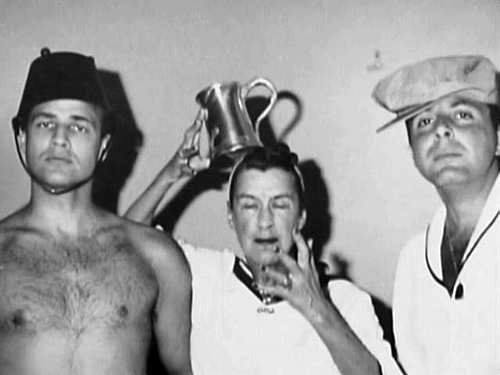
Stewart Bee Lily and Brando

My time with Stewart was magic as it was for everyone in our class. He would come in with a cane at 90 years old, boxes of memorabilia from the movies, scrapbooks, film clips, letters and love notes from people in the industry. He was armed with stories about his writing career, his friendships with the Newman’s, Sally Field, every important director of his era and then proceeded to mesmerize us with the truth about what it takes to write a story like Rebel Without a Cause. He changed my life. It was that simple. He renewed my courage to write from that place the defied Hollywood and he simply made it possible for me to love what I do even when writing in a straightjacket.

This post is a tribute to the courage of writers like Stewart Stern.

Here is a glimpse into the life of a writer who changed the world with his stories. May we all have courage to be truthful, heartfelt, alive writers, who stay the course.

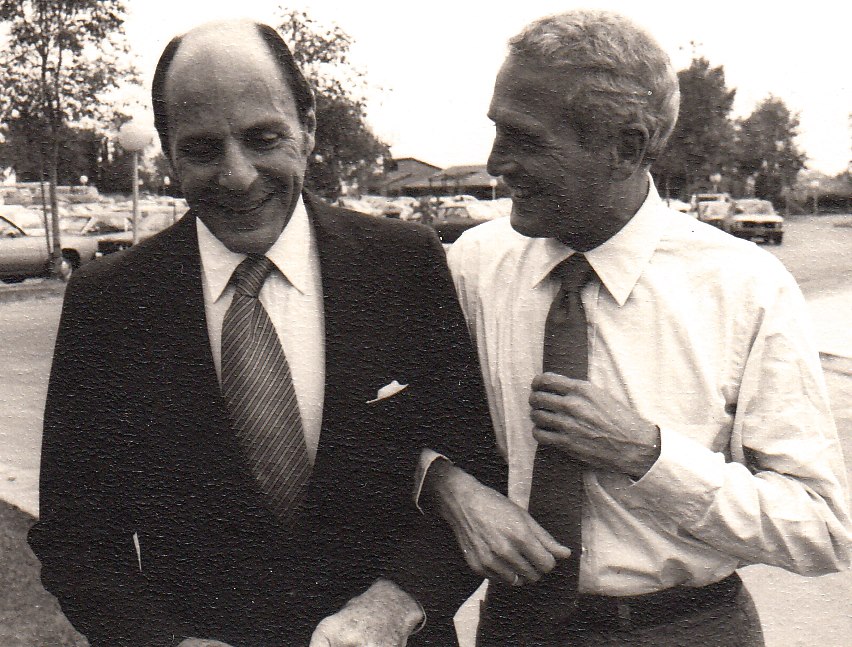
Paul and Stewart

On January 26, would have been PAUL NEWMAN’s  90th birthday. Lifetime best friends, Stewart so cherished his friendship with Paul. Pictured here is Paul, as Stewart’s Best Man, before Stewart walked down the aisle.https://www.youtube.com/watch?v=WvecbLje7Nk

stewart portraitAnd if you want to read writing that will make you weep with it’s beauty and clarity, here is the letter that Stewart Stern wrote upon the death of James Dean.

12 October, 1955

Dear Marcus and Mrs. Winslow:

I shall never forget that silent town on that particular sunny day. And I shall never forget the care with which people set their feet down — so carefully on the pavements — as if the sound of a suddenly scraped heel might disturb the sleep of a boy who slept soundly. And the whispering. Do you remember one voice raised beyond a whisper in all those reverential hours of goodbye? I don’t. A whole town struck silent, a whole town with love filling its throat, a whole town wondering why there had been so little time in which to give the love away.

Gandhi once said that if all those doomed people at Hiroshima had lifted their faces to the plane that hovered over them and if they had sent up a single sigh of spiritual protest, the pilot would not have dropped his bomb. That may or may not be. But I am sure, I am certain, I know — that the great wave of warmth and affection that swept upward from Fairmount has wrapped itself around that irresistible phantom securely and forever.

Nor shall I forget the land he grew on or the stream he fished, or the straight, strong, gentle people whom he loved to talk about into the nights when he was away from them. His great-grandma whose eyes have seen half of America’s history, his grandparents, his father, his treasured three of you — four generations for the coiling of a spring — nine decades of living evidence of seed and turning earth and opening kernel. It was a solid background and one to be envied. The spring, released, flung him into our lives and out again. He burned an unforgettable mark in the history of his art and changed it as surely as Duse, in her time, changed it.

A star goes wild in the places beyond air — a dark star born of coldness and invisible. It hits the upper edges of our atmosphere and look! It is seen! It flames and arcs and dazzles. It goes out in ash and memory. But its after-image remains in our eyes to be looked at again and again. For it was rare. And it was beautiful. And we thank God and nature for sending it in front of our eyes.

So few things blaze. So little is beautiful. Our world doesn’t seem equipped to contain its brilliance too long. Ecstasy is only recognizable when one has experienced pain. Beauty only exists when set against ugliness. Peace is not appreciated without war ahead of it. How we wish that life could support only the good. But it vanishes when its opposite no longer exists as a setting. It is a white marble on unmelting snow. And Jimmy stands clear and unique in a world where much is synthetic and dishonest and drab. He came and rearranged our molecules.

I have nothing of Jim’s — nothing to touch or look at except the dried mud that clung to my shoes — mud from the farm that grew him — and a single kernel of seed corn from your barn. I have nothing more than this and I want nothing more. There is no need to touch something he touched when I can still feel his hand on me. He gave me his faith, unquestioningly and trustfully — once when he said he would play in REBEL because he knew I wanted him to, and once when he tried to get LIFE to let me write his biography. He told me he felt I understood him and if LIFE refused to let me do the text for the pictures Dennis took, he would refuse to let the magazine do a spread on him at all. I managed to talk him out of that, knowing that LIFE had to use its own staff writers, but will never forget how I felt when he entrusted his life to me. And he gave me, finally, the gift of his art. He spoke my words and played my scenes better than any other actor of our time or of our memory could have done. I feel that there are other gifts to come from him — gifts for all of us. His influence did not stop with his breathing. It walks with us and will profoundly affect the way we look at things. From Jimmy I have already learned the value of a minute. He loved his minutes and I shall now love mine.

These words aren’t clear. But they are clearer than what I could have said to you last week.

I write from the depths of my appreciation — to Jimmy for having touched my life and opened my eyes — to you for having grown him all those young years and for having given him your love — to you for being big enough and humane enough to let me come into your grief as a stranger and go away a friend.

When I drove away the sky at the horizon was yellowing with twilight and the trees stood clean against it. The banks of flowers covering the grave were muted and grayed by the coming of evening and had yielded up their color to the sunset. I thought — here’s where he belongs — with this big darkening sky and this air that is thirst-quenching as mountain water and this century of family around him and the cornfield crowding the meadow where his presence will be marked. But he’s not in the meadow. He’s out there in the corn. He’s hunting the winter’s rabbit and the summer’s catfish. He has a hand on little Mark’s shoulder and a sudden kiss for you. And he has my laughter echoing his own at the great big jokes he saw and showed to me — and he’s here, living and vivid and unforgettable forever, far too mischievous to lie down long.

My love and gratitude, to you and young Mark,

Stewart

https://www.facebook.com/StewartSternDocumentary

Thank you for your interest in this site and in the evolution of story.  For those who are interested I am giving a free half hour consult during the month of February,  for writers and any individuals who are seeing that their lives are something to share.  Please contact me through this site by going to the page that is listed on the home page, “Contact Maya”.  I look forward to speaking with you,


543 Views
Like · · · 915

No Plot, No Direction, No Way

“Acknowledge your creativity and genius. The qualities of creativity and genius are within you, awaiting your decision to match up with the power of intuition.” Wayne Dyer

Today I hit a speed bump. I had cruised down the mountain on I 70 here in Colorado to set up shop in the local Barnes and Nobel with a whole lot of other writers, bloggers, emailers, and avid readers to plug into the Morphic Field and write. I am a big believer in Rupert Sheldrake’s contribution to understanding energy fields and how we are affected by them.

“There is mounting evidence that as more and more people learn or do something it becomes easier for others to learn or do it. Sheldrake postulates that there is a field of habitual patterns that links all people, which influences and is influenced by the habits of all people. The more people have a habit pattern — whether of knowledge, perception or behavior — the stronger it is in the field, and the more easily it replicates in a new person. In fact, it seems such fields exist for other entities too — for birds, plants, even crystals. Sheldrake named these phenomena morphogenetic fields – fields, which influence the pattern or form of things.

I noticed a long time ago that hunkering down in my office at home, alone, and focused on a writing project did not yield the same inspiration, excitement or focus as when I was in a group of people, all somewhat focused on the same thing. So, Barnes and Nobel became that place that I went to be in a “writing field”. I found that I was faster, clearer and more energized when in a field of energy conducive to writing.

I also found that when I had all the alone time I can tolerate, am surrounded by my cat, my tea, my notes and the best music in the world, all of a sudden a million things break in on the process: The laundry buzzer goes off, the phone rings, I remember I haven’t paid that long overdue bill, and the energy it takes to stave off the urge to get up and fold the laundry or make that call, sucks the life right out of my writing moment.

Well, today I got in the car and here I am at Barnes and Nobel. There are at least 15 other people pounding away on their computers and another hundred focused on “words” in books, on Kindle, and there is a great atmosphere of story permeating this teaming box store. I should have just plunged right into the middle of writing with no effort. But alas! I sit here starring at my screen. The muse is nowhere to be found, the words did not tumble out as they always do, I feel bored and uninspired. Holy Moly! I am not accustomed to this feeling of having, nothing to say.

So, I sat for a while and just watched my surroundings. I got a cup of tea, I walked throughout the stacks and stacks of best sellers, and unfathomably mediocre books that someone is buying. Nothing clicked. So, I waited. And waited. This was not an acceptable state to be in and my mind was in a huff. “It’s Sunday for Christ Sake, is my muse on vacation or preparing for the Super Bowl…WTF?”

Then, I just relaxed my churned up state and posed an inner question: “What does my intuition say about this?” Intuition? Intuition is the most powerful voice we have as writers, as crazed journalers, as storytellers. Intuition cuts through the bullshit of how we think we should write or how we think the story should go and allows the story to tell itself.

Deep breath.

There is so much anxiety for the writer to tell the story “right”, to do justice to the idea that set us on the course of writing in the first place. Intuition will tell you that there is absolutely no “right” way, when it comes to storytelling.

I define intuition as the subtle knowing without ever having any idea why you know it, and, Sophy Burnham, bestselling author of The Art of Intuition, tells The Huffington Post. “It’s different from thinking, it’s different from logic or analysis … It’s a knowing without knowing.”

Our intuition is always there waiting for the mind to relax, whether we’re aware of it or not. As HuffPost President and Editor-in-Chief Arianna Huffington puts it in her upcoming book Thrive:

“Even when we’re not at a fork in the road, wondering what to do and trying to hear that inner voice, our intuition is always there, always reading the situation, always trying to steer us the right way. But can we hear it? Are we paying attention? Are we living a life that keeps the pathway to our intuition unblocked? Feeding and nurturing our intuition, and living a life in which we can make use of its wisdom, is one key way to thrive, at work and in life.” And, as a writer.

So, I switched fields. I pulled my energy up and out of the bookstore field and went deep inside. I found a new field to plant my awareness in. This is the field of openness and allowing a story, a moment, a paragraph or poem to float up from the collective field and root in your psyche. Then the ride begins. You put pen to paper, you open a new Word Doc and allow this all-pervasive, ever present energy of creativity to flow through you and take you somewhere unexpected with no map, no direction and no plot.

This surrendering to that which is not the mind will transform you as a writer, a storyteller and as a person.

Stephen King believes in intuition and does not believe in outlines. And he doesn’t much like plot either.

He has this cosmic belief “that stories are like fossils that already exist somewhere, buried deep in the earth, in a lost canyon or maybe in your backyard, and it is the writer’s job to unearth it.” Says Andrea Meyer.

“The writer’s job is to use the tools in his or her toolbox to get as much of each one out of the ground intact as possible,” he says. “No matter how good you are, no matter how much experience you have, it’s probably impossible to get the entire fossil out of the ground without a few breaks and losses. To get even most of it, the shovel must give way to more delicate tools: air-hose, palm pick, perhaps even a toothbrush. Plot is a far bigger tool, the writer’s jackhammer. You can liberate a fossil from hard ground with a jackhammer, no argument there, but you know as well as I do that the jackhammer is going to break almost as much stuff as it liberates. It’s clumsy, mechanical, anti-creative. Plot is, I think, the good writer’s last resort and the dullard’s first choice.”, says Stephen King.

So, no matter where you write, what you write, there is the most valuable alliance in the world available all of the time, no matter what your story is: Intuition IS the Muse. Intuition will never ever steer you in a wrong direction but it will most certainly steer you in a direction that may be very unexpected.

(Multi-media artwork by Gerri Proulx)